


A scar can seem less noticeable beside a window and stand out again under a bathroom light. That does not automatically mean its pigment has changed. Scar camouflage in different lighting needs to be understood in terms of both color and the way the area is being viewed.
If you are considering scar camouflage in Salt Lake City, the useful question is how much the visible color contrast might be reduced in everyday life. An exact match under every light is not a realistic promise. At Moonlit PMU, the starting point is an individual assessment of your scar, surrounding skin, and expectations.

Why the same color can look different
The stock images here illustrate color relationships using makeup and printed swatches. They do not show tattoo pigments or treatment results.
Daylight and indoor lamps do not provide identical light. The light reaching a surface affects the color we perceive. Two colors can also appear to match under one light source and look different under another, a phenomenon called metamerism. Konica Minolta explains this distinction between lighting, color appearance, and metamerism.
That is a reason to be cautious about a promise that a tattooed area will be indistinguishable from skin everywhere you go. It is not a diagnosis of why any particular camouflage result looks different. Your artist needs to assess the actual area rather than assign a cause from one photograph.
Separate color contrast from the surface of the scar
A color difference and a texture difference are separate concerns. Camouflage adds pigment to suitable scar tissue to reduce visible color contrast. It does not flatten a raised scar or fill a depression.
Notice whether you are seeing a lighter patch, a darker edge, or a shadow along the surface. Adding pigment is not a way to remove that shadow or change the shape of the tissue.
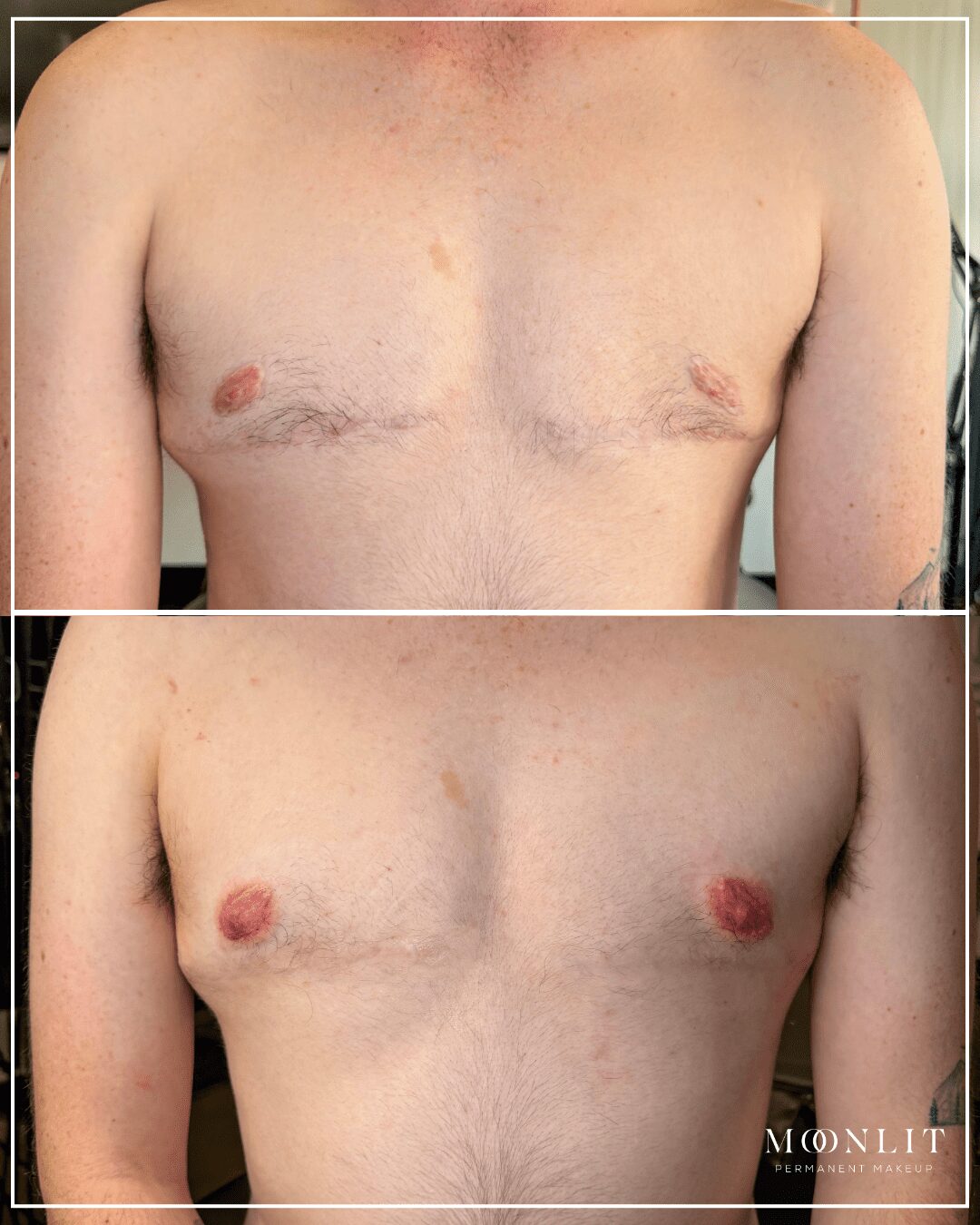
Mastectomy scar camouflage and areola graft restoration before and after. Individual results vary. These photographs are not a controlled comparison of lighting conditions.
A useful comparison keeps the viewing conditions consistent. If you are sharing photographs, explain where the difference is most noticeable and whether the images were taken under different lights. Photographs support a conversation; they do not replace an assessment.
How a scar camouflage plan is developed
- Consultation: discuss the scar, previous treatment, and the change you want to see.
- Assessment: review stability, color contrast, texture, and individual suitability.
- Area planning: identify the scar boundaries and the surrounding skin being considered.
- Pigment selection: consider the starting color and how the result may settle after healing.
- Treatment and follow-up: proceed only when appropriate, with individualized healing guidance.
Who this conversation is useful for
- People whose fully healed scars appear lighter than the surrounding skin.
- People comparing results photographed in noticeably different conditions.
- People unsure whether color, texture, or both are drawing their attention.
- People considering further camouflage and wanting an assessment before adding pigment.
A fully healed appearance alone does not establish candidacy. Raised, sensitive, red, or changing scars need individual review. Some situations call for more time or advice from an appropriate medical professional rather than a tattoo appointment.

What I focus on at Moonlit PMU
My approach starts with your goals and the skin in front of me. For scar work, that means considering the surrounding color, the scar itself, and what pigment can realistically change. A result should be discussed in terms of its healed appearance, rather than judged only while the area is freshly treated.
I do not need you to want your scar hidden. You may want less contrast, have questions about an existing result, or decide that camouflage is not the right choice. The consultation is where those distinctions belong.
Look for a useful comparison, not a perfect photograph
One flattering image cannot establish how a result looks in every setting. Clear expectations, consistent comparisons, and an honest discussion of texture are more useful than a promise that your scar will disappear.
Frequently asked questions
Does a difference under indoor lighting mean the pigment has changed?
Not necessarily. A change in viewing conditions is different from a change in the pigment itself. If the appearance concerns you, discuss when the difference started and how it looks in person. Do not assume that lighting explains every color change.
Can more pigment make a scar match under every light?
No exact match in all lighting should be promised. More pigment also does not remove scar texture. Whether further treatment is appropriate depends on an assessment of the existing color, skin, and your goals.
Can you judge my result from a phone photograph?
A photograph can help explain your concern, but it is one view under particular conditions. Include surrounding skin and describe the lighting. An in-person assessment may be needed before deciding whether treatment is suitable.
Should I compare a fresh result with a healed result?
They represent different stages. A freshly treated area should not be presented as proof of its settled appearance. Ask whether example images show fresh work or a healed result, and discuss your own review timing with your artist.
How should I prepare for a scar camouflage appointment?
Discuss your scar history, previous treatments, and current skin condition before treatment. Read the scar camouflage pre-care guidance and confirm the instructions for your appointment. Do not stop prescribed medication without advice from your prescriber.
Which aftercare instructions should I follow?
Follow the individualized instructions provided for your appointment. The scar camouflage aftercare page is a reference to discuss with your artist. Clarify any uncertain timing before treatment rather than substituting advice from a different service.
Helpful Links
- How pigment matching works for scar camouflage
- Scar camouflage results and realistic expectations
- Book a free 15-minute virtual or in-person consultation
- Meet Alison at Moonlit PMU



View comments
+ Leave a comment