


Start with the feature you keep returning to when you use removable makeup. If a particular brow shape, lash line, or lip color consistently feels right, that gives you a useful starting point for choosing your first PMU service. If your preferences are still changing, more time with makeup can be the better choice. If healed surgical scars or areola appearance are your priority, start with a tissue assessment instead.
This guide is for people across the United States considering gender-affirming permanent makeup. Moonlit PMU is based in the Salt Lake City area of Utah. You can explore a feminine, masculine, androgynous, or mixed expression without having to choose a label for your design.
Choose a feature before choosing a service
Write down what you actually change when you get ready. Is it the outer half of your brows? A line between the lashes? The contrast between your lips and the surrounding skin? Then ask whether you like that change on ordinary days as well as when you dress up.
Use the same removable makeup shape on several occasions and look at it in daylight, without a filter, and alongside the rest of your face. A makeup trial can clarify your preference. It cannot predict exactly how tattoo pigment will heal.
Brow masculinization: when shape or density is your priority
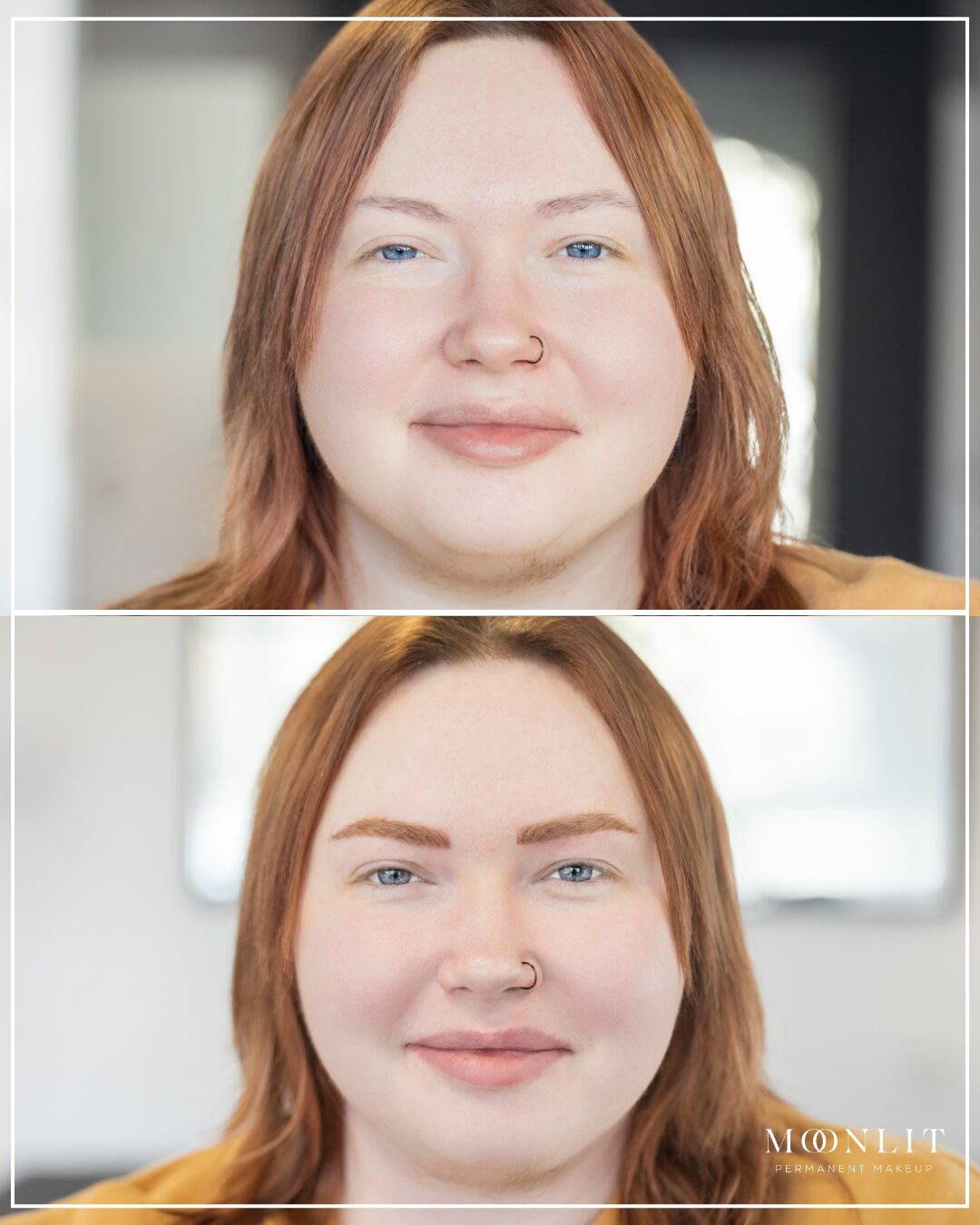
Brow masculinization may be the first service to discuss if you repeatedly fill a gap, change an arch, or draw a straighter outline. The question is which part of that design you want present when the pencil comes off.
I consider existing brow hair, placement, facial balance, and the amount of visible density you want. A straighter brow is not automatically the right choice for a masculine goal, and an arch is not a requirement for a feminine one. The design needs to work on your face.
Eyeliner feminization: when eye definition is your priority
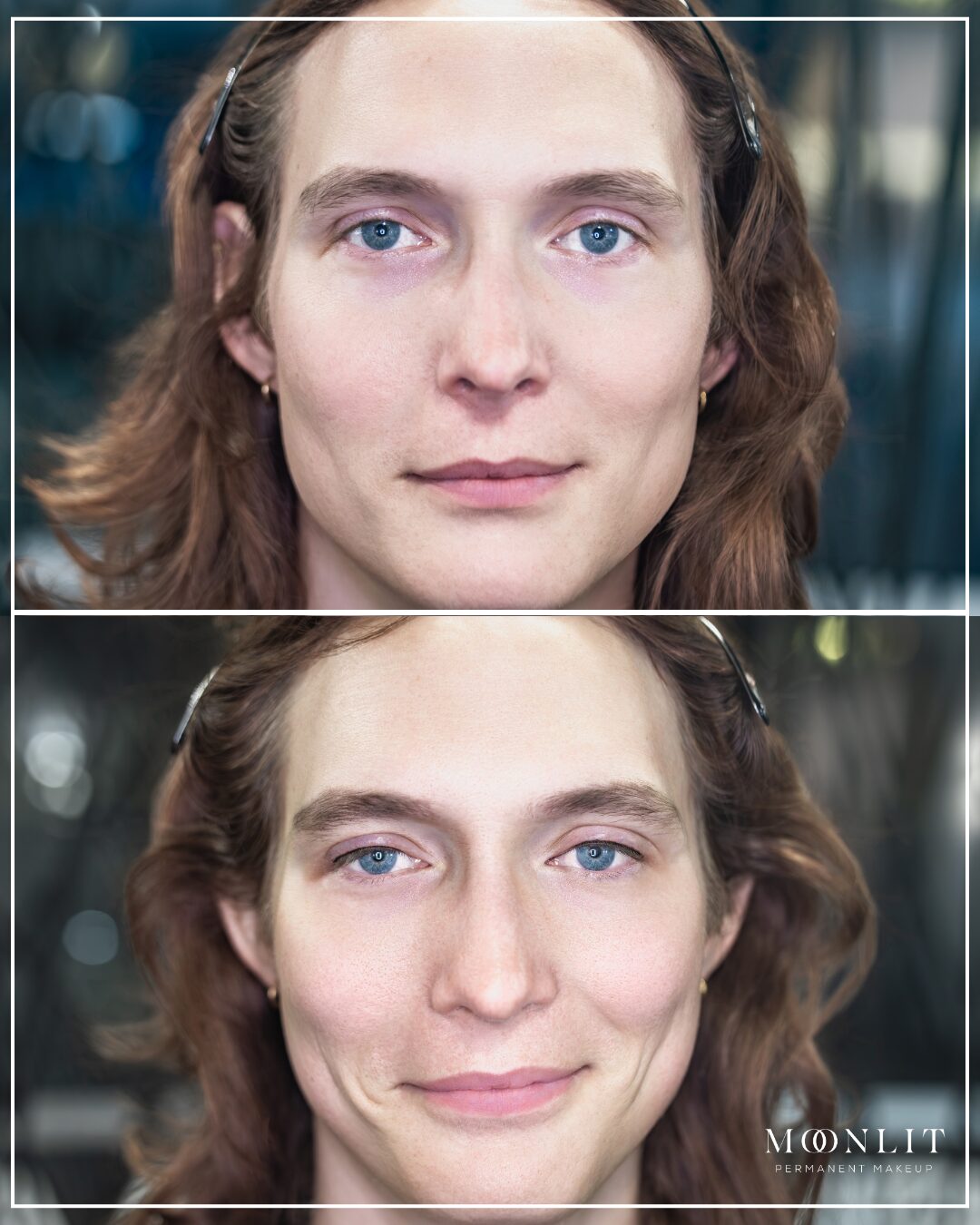
If eyeliner feminization interests you, compare a lash enhancement with a visible eyeliner design. Lash enhancement concentrates pigment along the lash line. A visible line adds a more apparent makeup shape.
Eye anatomy and lid space affect what is suitable. Think about whether you want definition on days without mascara or other makeup, and whether the same line fits the different ways you present. You do not need a wing to make eyeliner worth discussing.
Lip blush: when color or the lip border matters most
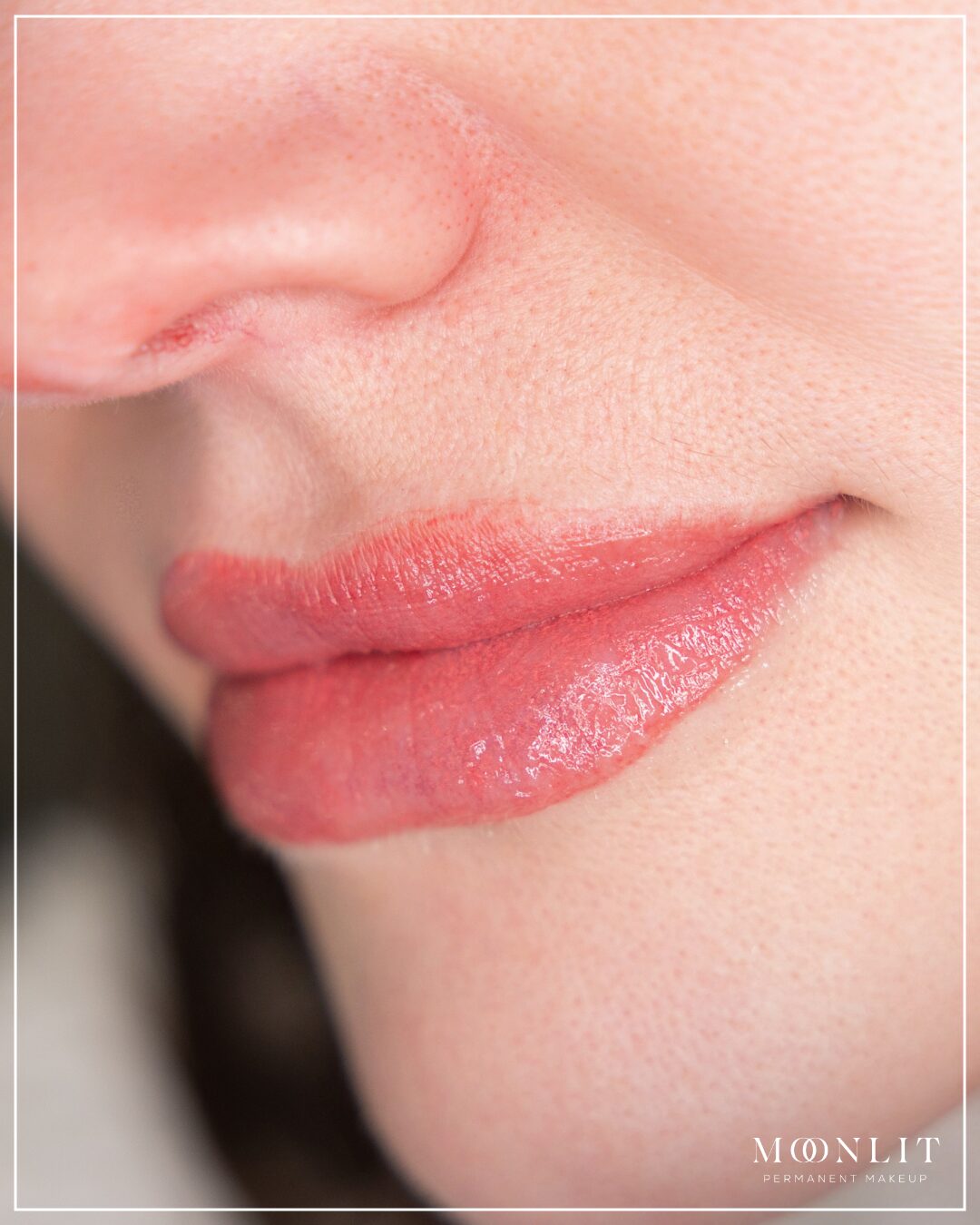
Lip blush may be relevant if you regularly add color or define an uneven-looking lip border. Your starting lip color is part of pigment planning, so a lipstick reference does not establish an exact healed shade.
Tattooing adds pigment; it does not add physical volume. If your preferred lip shape depends on drawing well beyond the existing lip border, bring that up before choosing this service. The design needs an individual assessment.
After top surgery: scar camouflage and areola restoration
If your priority is the appearance of your chest after top surgery, scar camouflage and areola restoration address different concerns. Scar camouflage aims to reduce visible color contrast. Areola restoration can address the appearance of color and definition, including eligible healed areola grafts.
The first decision is whether the tissue is fully healed, stable, and suitable for tattooing. Assessment and any needed medical clearance come before pigment planning. Tattooing does not remove scar texture or rebuild tissue, and more than one session may be appropriate.
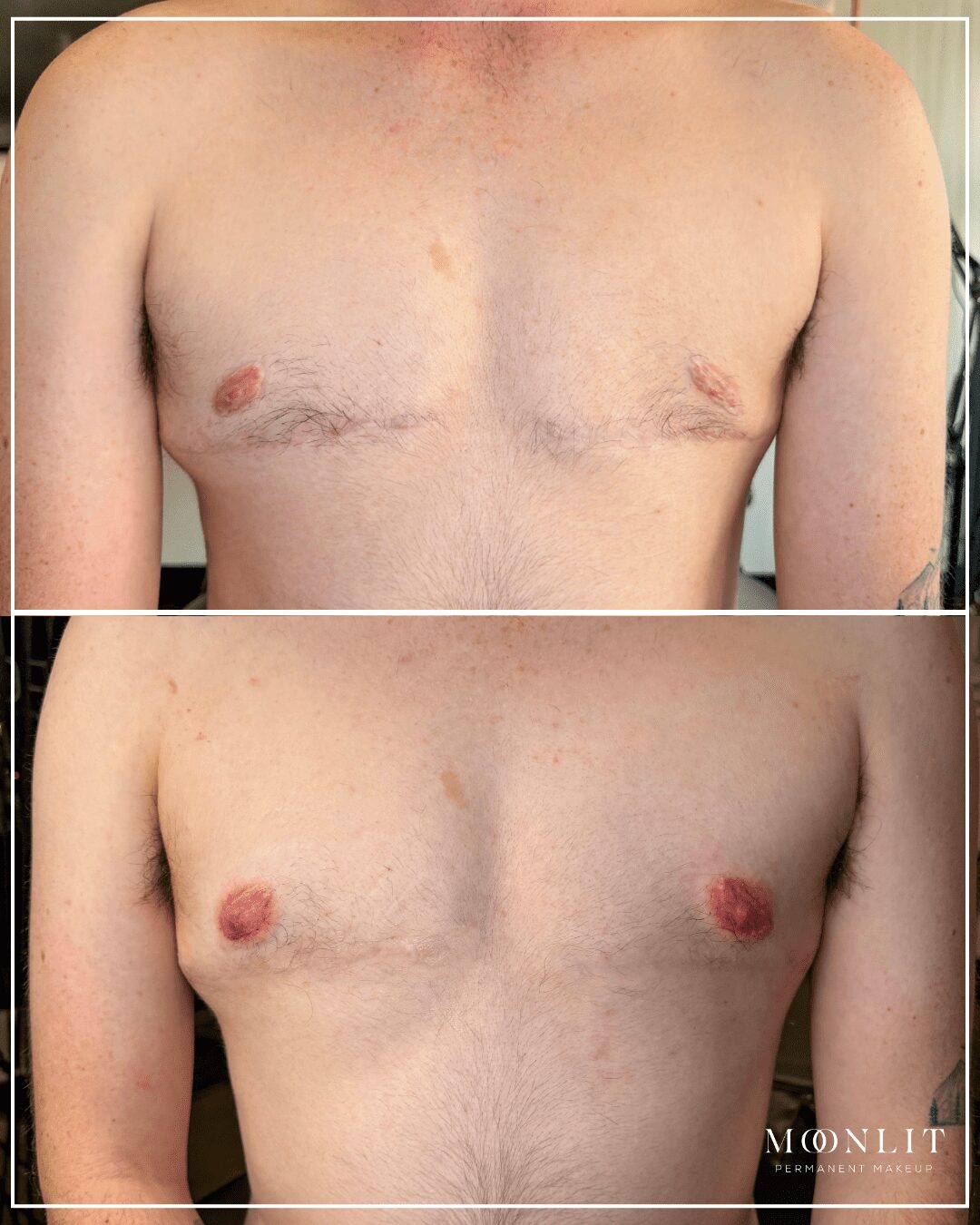
The photographs show examples of my work, not a required look for any gender. The top-surgery comparison includes scar camouflage and areola graft restoration. A photo cannot establish your candidacy or guarantee the same outcome.
When waiting is the more useful decision
PMU is a tattoo. Fading is not a reliable undo button. The FDA notes that permanent makeup is not easily removed. A lighter design still deserves a decision you can live with.
- Keep experimenting if you only like the shape in heavily edited photographs.
- Pause if the design works for one presentation but conflicts with another you enjoy regularly.
- Discuss previous PMU before assuming new pigment can change its shape or color.
- Bring planned facial procedures into the timing conversation before committing to placement.
How we narrow down the first service
- Consultation: identify one feature, the change you want, and the changes you want to avoid.
- Design: assess the existing anatomy and compare placement with your preferred reference.
- Pigment: plan around starting color, skin characteristics, and the intended healed appearance.
- Treatment: proceed only with an agreed design and an assessment that supports the service.
- Healing and review: follow the instructions for that treatment, then assess the settled result before deciding on more work.
Who this approach is for
- You have several PMU interests and want to decide which deserves attention first.
- Your presentation varies, and you want a design that leaves room for those variations.
- You know what feels wrong about a feature but do not yet know which treatment addresses it.
- You would rather make one considered decision than plan several services at once.
What I need to understand before designing
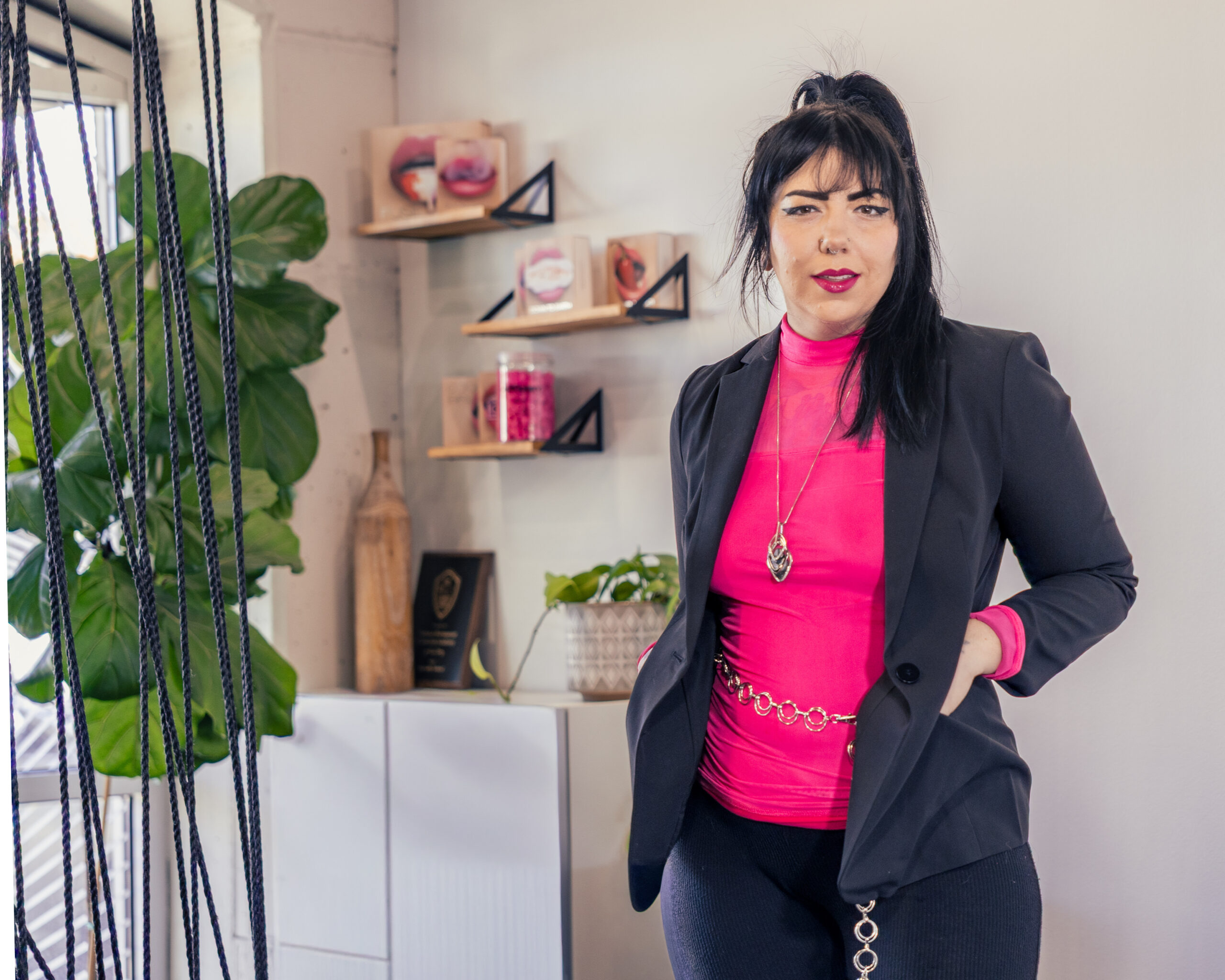
I’m Alison Daigle, the artist behind Moonlit PMU. My work starts with listening and assessing color, shape, and facial balance. For a first service, I want to understand what you already like about your features as carefully as what you want to change.
For brows, that means looking at existing hair before adding visual density. For eyeliner, it means considering the available lid space before choosing thickness. For lips, it means accounting for existing color before choosing pigment. A gender label alone does not answer any of those design questions.
You can choose one thing, or keep exploring
A useful first decision can be quite specific: a brow gap you want filled, a lash line you want defined, or a lip tone you want to discuss. You can leave everything else open. If you cannot yet name a change you want to keep, continuing with removable makeup is a reasonable outcome.
Frequently asked questions
Is there a best first PMU service for gender expression?
There is no universal starting service. Begin with the feature you consistently want to adjust, then check whether tattooing can address that change appropriately. Brows are not automatically the first choice, and choosing PMU is optional.
Can I choose a design that is not strictly masculine or feminine?
Yes. Describe the shape, color, density, and visibility you want without having to assign the whole design to a category. You can also explain which effects you do not want. Your preferences and anatomy guide the discussion.
Should I book several services together?
You do not have to. If you are uncertain about the overall change, beginning with one assessed service lets you evaluate its healed appearance before deciding on another. Your artist can discuss whether a different order or timing is appropriate.
How should I prepare once I have chosen a service?
Preparation depends on the treatment. If brows are your starting point, review brow PMU pre-care and confirm the instructions for your appointment. Ask for the corresponding guidance if you choose eyes or lips. Do not stop prescribed medication without advice from your prescriber.
Will every service have the same healing instructions?
No. Use the instructions for the area being treated. The brow PMU aftercare page is relevant to brows, not a substitute for eye or lip instructions. Confirm the care plan before treatment so you can decide whether the healing period fits your routine.
Can I discuss my options virtually before traveling?
Yes. Moonlit PMU offers free 15-minute virtual or in-person consultations. A virtual conversation can help narrow the service and questions to assess in person. Treatment takes place at the Utah studio; photographs or a video call cannot confirm every detail of candidacy.
Helpful Links
- Virtual consultations for gender-affirming PMU
- What a gender-affirming PMU consultation covers
- Book a free 15-minute virtual or in-person consultation
- Meet Alison at Moonlit PMU


View comments
+ Leave a comment