


Some white scars can be treated with scar camouflage, but their color alone does not establish candidacy. The scar needs to be fully healed, stable, and suitable for tattooing. The goal is to reduce the visible difference between the scar and nearby skin. Raised or indented texture remains.
At Moonlit PMU, scar camouflage in Salt Lake City starts with assessing the scar and the skin around it. If the main thing you notice is a pale line against darker skin, color blending may be worth discussing. If the main concern is a ridge, an indentation, or tightness, adding pigment addresses a different problem.

White describes the contrast, not the whole scar
A scar can be lighter than the surrounding skin and still have very different treatment needs from another pale scar. The American Academy of Dermatology explains that scars can become lighter or darker as they mature. A change in color is only part of that process.
During an assessment, the useful questions are whether the scar is still changing, how its surface differs from nearby skin, and what you want to look different. A pale area that you cannot identify as a scar should be assessed by a healthcare professional before it is treated as one.
- Color: Is the visible difference mainly a lighter tone, or are there several colors within the scar?
- Surface: Is the area flat, raised, indented, or uneven?
- Stability: Has its appearance changed recently, and is there current irritation or sensitivity?
- History: What caused the scar, and has it already had tattooing, revision, or another treatment?
Adding pigment and changing texture are separate goals
Scar camouflage adds pigment to eligible scar tissue. It does not remove the scar, flatten a raised area, fill an indentation, or release tight tissue. A scar may remain visible because of its surface even if its color becomes closer to the surrounding skin.
If texture or discomfort is your main concern, speak with an appropriate medical professional about that concern first. If you are not ready for a tattoo, removable body makeup can be an option on intact, healed skin. It does not reproduce a tattoo result, but it leaves you free to change your mind.
What a before-and-after photograph can tell you
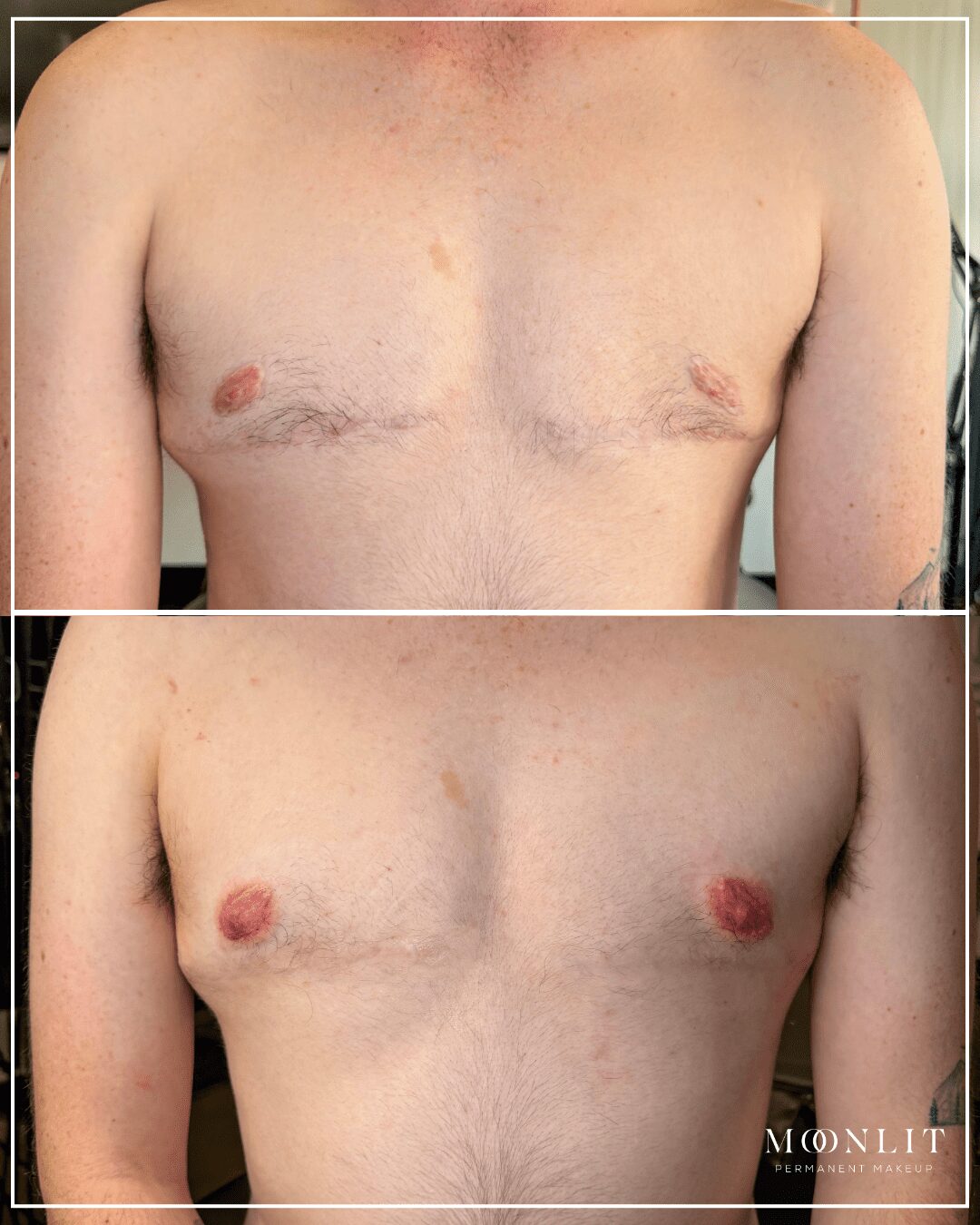
This example shows scar camouflage together with areola graft restoration. The comparison includes changes in areola color as well as scar appearance. It is not an isolated test of white-scar camouflage.
When reviewing photographs, ask which areas were treated, what else changed, and whether the image shows fresh or healed work. This photograph does not establish the healing stage or predict your outcome. Your scar still needs its own assessment.
The target is the surrounding skin, not a generic beige
I look at the color difference between the scar and nearby skin, including undertone and variation across the area. A pale scar is not automatically treated with one standard shade. Pigment planning needs to account for the starting tissue and the intended healed blend.

A printed swatch card can illustrate color comparison, but it cannot establish the pigment formula for a scar. The stock image shown here is an illustration, not a photograph of a treatment or proof of a match. An exact invisible match cannot be promised.
How the assessment becomes a treatment decision
- Consultation: review the scar’s history, current appearance, and the change you want.
- Assessment and mapping: inspect the scar, its boundaries, texture, and surrounding skin.
- Pigment planning: consider color contrast and whether camouflage is an appropriate approach.
- Treatment: proceed only when the scar is suitable and the plan is agreed.
- Healing and review: follow the supplied care instructions and assess the settled appearance before deciding on further pigment.
A white appearance is not a substitute for full healing. Surgical scars may also need medical clearance. The number of sessions depends on the area and its response; more than one may be appropriate. There is no useful promise of complete coverage in one appointment.
Who may want to discuss white-scar camouflage
- You have a fully healed, stable scar that is noticeably lighter than the skin around it.
- Your main concern is color contrast, and you understand that texture will remain.
- You are comfortable discussing a partial reduction in visibility rather than scar erasure.
- You can allow time for healing and review before deciding whether more treatment is useful.
These points are a starting conversation, not a self-screening approval. Active irritation, a changing scar, uncertainty about the pale area, or a concern about tissue health needs to be addressed before tattooing.
What I evaluate at Moonlit PMU
I’m Alison Daigle, a cosmetic and paramedical tattoo artist in the Salt Lake City area. My assessment starts with the difference you actually want reduced. A light line, a shadow from an indentation, and an uneven surface can all draw attention, but they do not call for the same plan.
That distinction guides the conversation before color selection. I consider scar maturity, texture, surrounding undertones, and realistic healed expectations. If adding color would leave your main concern unchanged, that needs to be clear before treatment.
A useful goal is specific
Reducing the contrast of a stable pale scar is a more useful goal than making a scar disappear. An assessment can help separate the part pigment may address from the parts it will leave unchanged. You can then decide whether that amount of change is worthwhile for you.
Frequently asked questions
Does a white scar automatically qualify for camouflage?
No. Color is one consideration. The scar’s maturity, stability, texture, condition, and treatment history also matter. A photograph or a description of the scar as white cannot establish suitability on its own.
Can camouflage flatten a raised white scar?
No. Tattoo pigment does not flatten scar tissue. If height, firmness, discomfort, or restricted movement is the concern, discuss it with a qualified healthcare professional before considering color camouflage.
How many sessions will a white scar need?
That cannot be determined from the color alone. The size of the area, starting color, tissue characteristics, and healing response affect the plan. More than one session may be appropriate, with review after healing rather than a fixed promise of coverage.
Should I only compare healed before-and-after photographs?
Ask to see healed work where available and confirm when each photograph was taken. Fresh treatment and healed pigment are different points in the process. Also ask whether the example includes another service, such as areola restoration, so you know which changes you are comparing.
How should I prepare for a scar camouflage appointment?
Start by confirming candidacy and the instructions for your area. Review the scar camouflage pre-care page with your artist if anything is unclear. Share previous treatments and relevant health information. Do not change prescribed medication without your prescriber’s advice.
What aftercare will I need?
Follow the instructions supplied for your treatment and ask how they apply to your scar’s location, clothing, activity, and any dressing used. The scar camouflage aftercare page is a resource to review alongside that individual plan. Do not judge the final color from the first days after tattooing.
Helpful Links
- How pigment matching for scar camouflage works
- Scar camouflage results and realistic expectations
- Book a free 15-minute virtual or in-person consultation
- Meet Alison at Moonlit PMU



View comments
+ Leave a comment