


Before deciding what to do with old permanent makeup, it helps to know what has already happened to that area. The original appointment, later refresh appointments, color corrections, and any previous removal all belong in the same conversation.
If you are considering saline PMU removal in Salt Lake City, this guide explains which details to bring, what to do when records are missing, and why a photograph cannot answer every question. Moonlit PMU offers saline removal. I do not offer laser treatment.

Start with what you want to change
“I want it removed” can mean several things. You might dislike the color but like the shape. You may want a shorter brow tail, less visible pigment, or enough lightening to make a different design possible. Those goals do not necessarily lead to the same plan.
At Moonlit PMU, the consultation considers the existing color, the area being treated, the condition of the skin, and your intended result. Saline lightening, an assessment for correction, or a conversation with another provider may be appropriate. Adding more pigment is not automatically the answer to unwanted previous work.
The FDA notes that permanent makeup is not easily removed. Complete removal is not guaranteed, and a treatment history cannot turn that uncertainty into a promise.
A visible color is useful information, but it is not a formula

A brow that looks gray today does not tell me every product used in it. A later correction may also have added a different color over the original work. If you have a pigment brand, shade name, or an artist’s treatment record, bring it. If you do not, leave that detail unknown rather than guessing.
This stock swatch chart illustrates color differences. It is not a record of tattoo pigments or a guide to predicting removal. Photos can show appearance; they cannot establish the original product, placement depth, or how your skin will respond.
Older photos can still help tell the story. A clear image before a correction, followed by an image after healing, may show what changed. Include approximate dates so fresh work is not mistaken for a settled result.
Build a short treatment timeline
You do not need a perfect file or every receipt. A few dated notes are more useful than trying to reconstruct everything from memory during the appointment.
- Original PMU: Note the area, approximate date, artist or studio, and any known technique or product details.
- Later appointments: List refresh appointments, color corrections, reshaping, and work done by a different artist.
- Previous removal: Include saline, laser, or other treatments received elsewhere, with dates and records if available.
- Healing and response: Describe what changed, what remained, and any unusual reaction or change in skin texture.
- Current goal: Say what you want reduced and what you would prefer to keep.
- Consultation assessment: Review the history and current skin before deciding whether treatment or referral is appropriate.
- Treatment and follow-up: Follow the individual plan and healing guidance; assess healed progress before considering another session.
If you were told that a product was “organic,” “semi-permanent,” or a particular color, write down exactly what you were told and whether you have a label or record. Marketing terms and a remembered shade are different from confirmed product information.
Your skin’s response belongs in the history too
Tell me about previous healing as well as the pigment. Mention persistent sensitivity, an unusual reaction, a raised or indented area, or healing that prompted medical care. Explain whether the area is still changing.
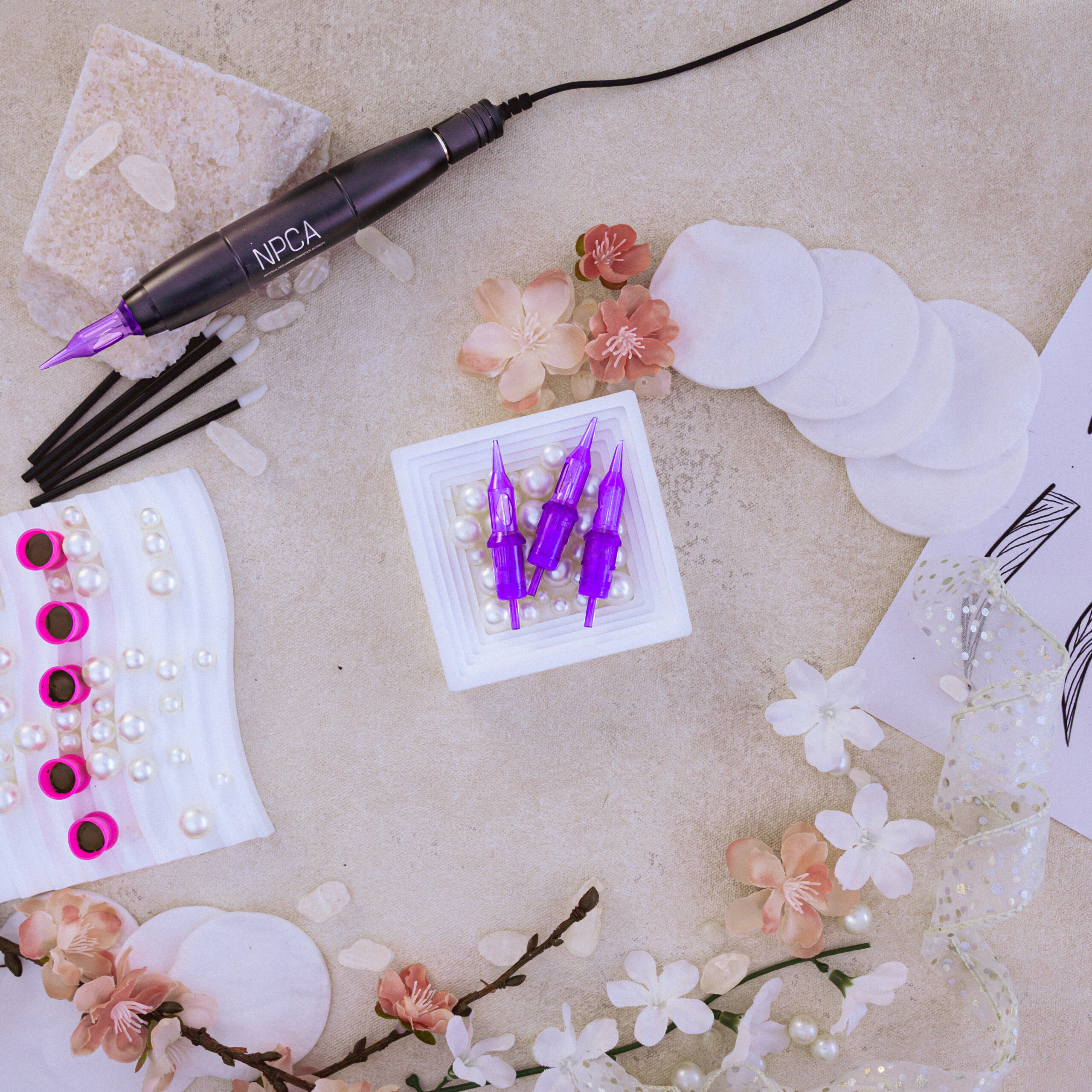
These PMU tools illustrate the equipment side of treatment. They do not establish that a particular area is ready for another procedure. More information or assessment by a healthcare professional may be needed before a cosmetic treatment plan can be made.
If you have had laser treatment elsewhere, include it in the timeline. That does not mean Moonlit PMU provides laser, or that switching methods is automatically suitable. Previous treatment and the current condition of the skin still need individual review.
Who this preparation helps
- People with healed PMU who want to discuss lightening before another design.
- People who have had several refresh appointments or corrections and are unsure what was used.
- People who have tried removal elsewhere and want to discuss what changed.
- People who want an assessment before adding more pigment to work they no longer like.
This is preparation for a consultation, not a checklist that establishes candidacy. Newly applied PMU and an area with an active skin concern require a different conversation; do not use this article to decide when to treat them.
How I use the information at Moonlit PMU
I look at the history alongside what is visible now. If the concern is shape, I want to understand which part you want to change. If it is color or saturation, I want to know whether the current appearance follows several layers of work or a recent correction. I also need to understand how the skin recovered.
That is why I do not promise a fixed session count from a color description or one photograph. Saline lightening is gradual, may involve more than one session, and needs reassessment after healing. The aim is a plan that accounts for your starting point and your goal.
Bring what you know, and mark what you do not
A useful history can be as simple as three approximate dates, two clear photos, and a sentence about what bothers you. Missing records do not need to be replaced with guesses. Knowing which details are uncertain is part of making a considered decision.
Questions about previous PMU and saline removal
Can I have a consultation if I do not know the pigment brand?
Yes. Bring the information you have and identify anything uncertain. Unknown pigment details limit what can be inferred; they do not justify guessing a formula or promising a particular response.
Should I mention every refresh appointment and correction?
Include them as accurately as you can, even if they were done years apart or by different artists. Approximate dates are helpful when you do not have exact ones.
Can photos tell you how many sessions I will need?
Photos can support an initial conversation, but they do not establish a reliable session count. The area, previous work, skin condition, goal, and healed treatment response all matter. Complete pigment removal is not assured.
What should I do before a saline removal appointment?
Ask for the current instructions for your specific treatment before the appointment. Share relevant skin concerns, medications, and previous reactions privately during the assessment. Do not stop prescribed medication or use home removal products based on a blog post.
Where can I read about saline removal aftercare?
There is a saline removal aftercare page. Ask for your current written instructions before treatment, and follow the guidance specific to your removal appointment. Do not substitute advice intended to retain a new cosmetic tattoo for an individual removal plan.
Does Moonlit PMU offer laser removal?
No. Moonlit PMU offers saline permanent makeup removal. If a different approach or medical assessment may be appropriate, that is a separate provider discussion.
Helpful Links
- Saline tattoo removal: an overview of the process
- Old PMU correction: assessing previous work
- Book a free 15-minute virtual or in-person consultation



View comments
+ Leave a comment